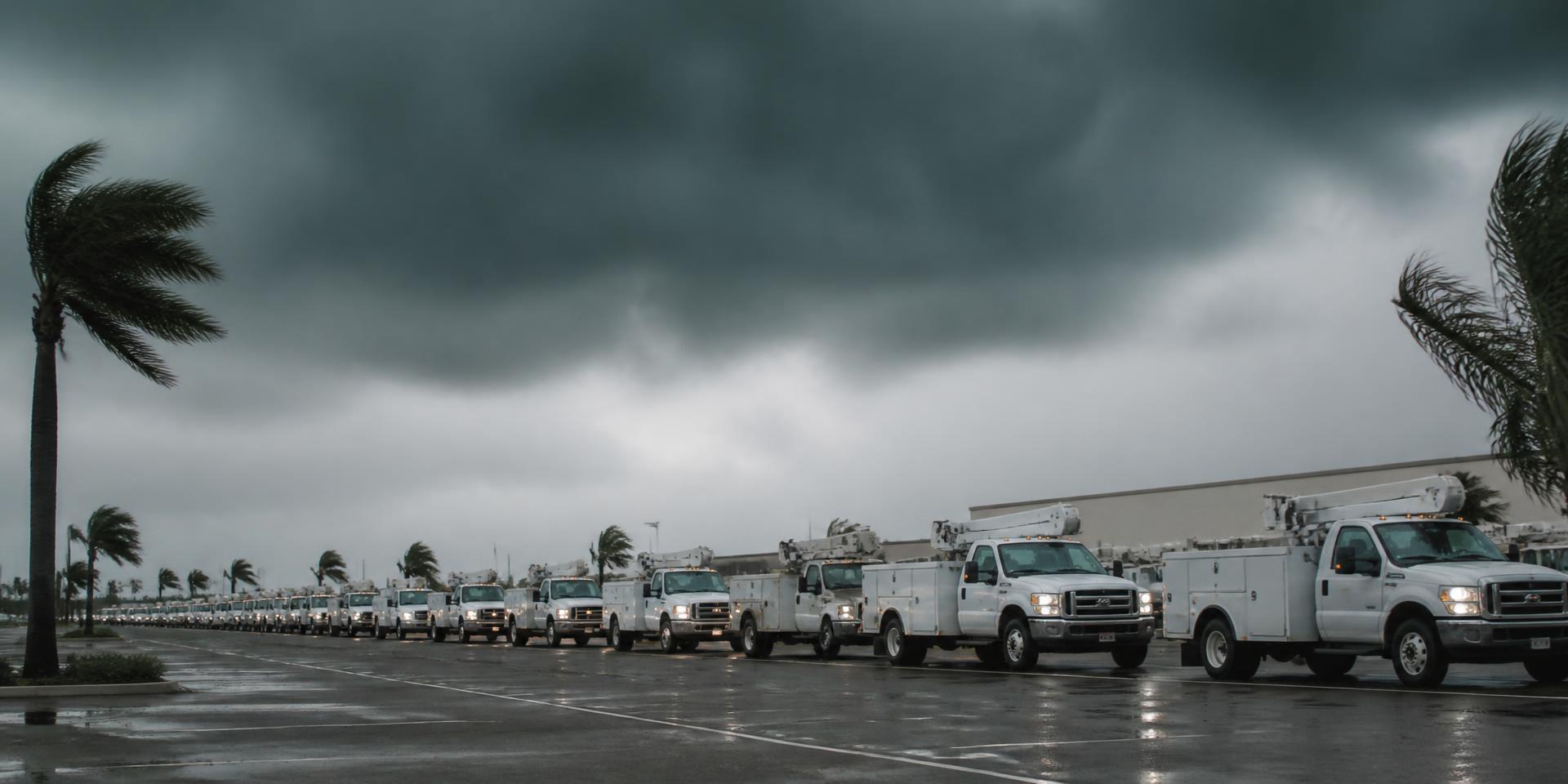
All-hazards response
When the grid goes down, the work does not.
Hurricanes, floods, ice storms, shutoffs, and the exercises that prepare for them. Drop Point Networks ships cased, battery-powered satellite internet that is running the moment the case opens — ordered like equipment, delivered like supplies, returned on our paperwork.
72
Hours that decide whether a response is ahead of the event or behind it
Kits stage toward the forecast before landfall, not after.
0
Standby subscriptions you carry between activations
Service is active when the kit arrives. Shelf units cost nothing on the shelf.
10
Minutes from case open to working network, smallest package
Larger packages stand up in under an hour with no technician.
What we deploy for
The events we deploy for
Hurricane & tropical storm recovery
Cell networks fail exactly where the work concentrates. Kits pre-stage toward the forecast cone and activate the day the wind stops. Counties, municipalities, and their contractors run intake, damage assessment, and points of distribution on our bandwidth.
Flood response
Rising water takes fiber and power together. High-ground staging areas, shelters, and swift-water teams get connectivity that arrives by truck and runs on batteries.
Ice storms & winter grid failures
Restoration in ice country means camps and staging yards in places that never had coverage to begin with. Cold-rated cases, batteries sized for short days, and spares on request.
Public safety power shutoffs
Planned de-energization still takes communities and community resource centers offline. Scheduled events are our easiest deployment: we deliver the day before, every time.
Earthquake & no-notice events
No forecast cone, no pre-staging window. This is what will-call and regional staging exist for: your runner picks up a working network the same day.
Exercises & planned deployments
Full-scale exercises, National Guard rotations, planned remote operations. Prove the kit in the exercise so the real activation is muscle memory.
Lifecycle
Anatomy of a deployment
- 01
Stage ahead of the forecast
For forecastable events we reposition inventory toward the threat before it arrives. You are not competing with every other agency for freight after landfall. Watch the same forecasts we do on the live hazard map.
- 02
Activate
Ship to your EOC, logistics staging area, or point of distribution — or send a runner for will-call. Every kit arrives charged, tested, configured, with service already active.
- 03
Sustain
Operational periods, battery swaps, added access points as the footprint grows, 24/7 phone support, and a technician available when the deployment is complicated.
- 04
Demobilize
Repack by the lid diagram, we arrange and pay the return leg with the regulated-battery paperwork handled on our side. Time under hire ends when the kit leaves your custody.
Hour one
The agencies that recover fastest ordered their network before they needed it.
Preseason
Ready before the season
Preseason placement puts a kit on your shelf with the subscription paused — you pay for readiness, not idle airtime. It deploys with your team, appears in your exercises, and goes out on your paperwork. When the event comes, transit time is zero.
- Season placement rates on every package
- Exercise support at day rates
- Your logo on the case if you want it — your kit for the season, our maintenance between deployments.
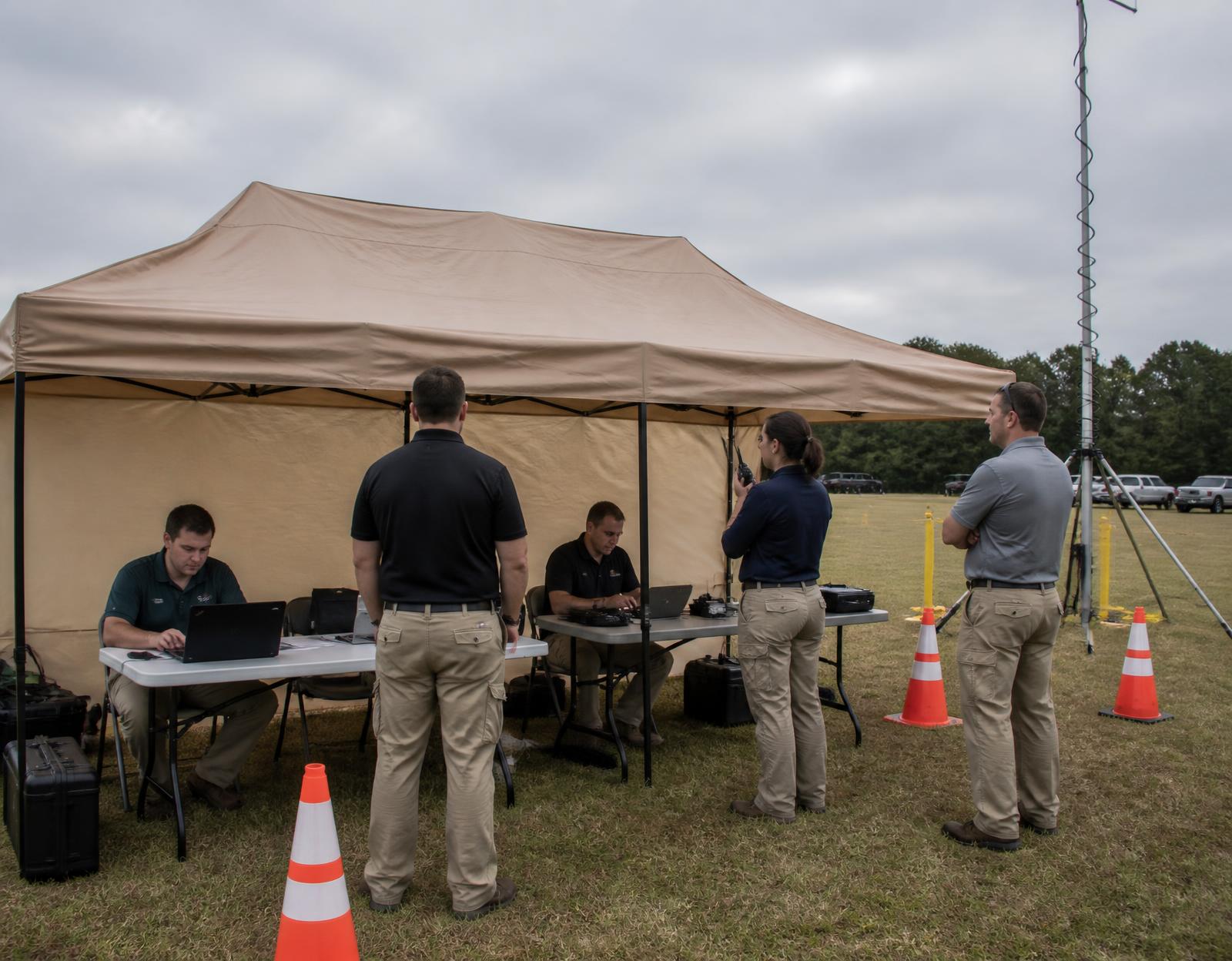
Procurement
How government buys this
- 01
Purchase card
Emergency acquisition thresholds are made for exactly this. A multi-kit month typically clears a cardholder's authority during a declared event.
- 02
Purchase order / state term
Net 30, W-9 and COI on file, capability statement formatted for a contracting file. One page, downloadable, no form-fill.
- 03
FEMA Public Assistance
Equipment rental for response and recovery operations is a familiar, well-documented cost category. We produce clean documentation for your reimbursement package: dated invoices, time under hire, and delivery records.